Current topics in archaeology, cultural heritage & historic preservation

Showing posts with label Fort Vancouver. Show all posts

Sunday, April 3, 2011

Warrior Art, Painted Caves, Flint-knapping, Mammoths ...and More

OAS MEETING: TUESDAY, APRIL 5, 7:00 PM AT OMSI
“Recounting Days of Glory: Plains Indian Warrior Art” is the topic of the April 5, 2011 Oregon Archaeological Society lecture. Dr. James Keyser is the featured speaker.

Keyser has conducted rock art research across western North America including projects in Alberta, South Dakota, Montana, Wyoming, Colorado, Utah, Oregon, Washington, and Alaska. He also has an ongoing research interest in European rock art in France, Spain, and Italy. He is a member of the Science Advisory Committee for the Study of Chauvet Cave (France), and is listed in Who's Who in Rock Art. Prior to retirement, he served for 27 years as a regional archaeologist for the U.S. Forest Service. He maintains faculty affiliation with the University of Montana and has more than 150 archaeology publications of which more than 100 concern rock art, robe art, or ledger art.

The presentation is at Oregon Museum of Science and Industry (OMSI) at 7:45 PM, and is free and open to the public. The talk is preceded at 7 PM by a general business meeting, which is also open to the public

See www.oregonarchaeological.org or call 503-727-3507 for more information.

JEAN AUEL BOOKSIGNING AT THE OAS MAY MEETING


As you've probably heard by now Jean Auel has released a new book "The Land of Painted Caves"! Jean has tentatively agreed to come to the May OAS meeting to sign copies of her new book (if she's back from her intergalactic book launch tour).

OAS will have a few copies of the new book that you can buy at the meeting or you can bring your own.

We'll make another announcement later in April to confirm (or reschedule) the booksigning.

Read a great Oregonian article about Jean Auel at: "Where I Write: Jean M. Auel..."


OAS PRESIDENT DEMONSTRATES FLINT-KNAPPING AT FORT VANCOUVER

Dennis Torresdal, OAS President, was featured in a recent Columbian article titled "Flint-Knapping Fun". Dennis, an expert flint-knapper, created fine blades, projectile points...and a lot of debitage during a well-attended exhibition at the Fort.

Read all about it at: Fort Vancouver Flint-knapping


WENAS CREEK MAMMOTH EXCAVATIONS: LECTURE APRIL 11


Monday, April 11, 6:30 PM, Columbia Gorge Interpretive Center, 990 SW Rock Creek Dr., Stevenson, WA, Patrick Lubinski, Wenes Creek Mammoth.

Lecturer: Patrick Lubinski, Professor of Anthropology, Central Washington University.

The 2005 accidental discovery of a mammoth bone near Selah, Washington led to a six- year investigation by Central Washington University, providing a glimpse into life during that time. In addition to 16,000-year-old mammoth and bison bones, students and faculty have found human-made artifacts of unknown age that could shed new light on the early presence of people in Washington. Lubinski will summarize the project and its findings using bone casts, PowerPoint images and video. .
http://www.humanities.org/programs/speakers/current-speakers/inquiring-mind-speaker-patrick-lubinski

As this is an evening event the Interpretive Center will be closed. After you turn north on Rock Creek Drive from Washington SR14 look for the employees entrance/parking lot on your right (less than 1/2mile). If you get to Skamania Lodge Road or the main entrance to the Interpretive Center you have gone too far.

For more info: Patrick Lubinski

CENTER FOR JAPANESE STUDIES HOSTS PSU TALK MAY 19
May 19, 6PM PSU Smith Memorial Hall 238 presentation by DR. Ho Tae JEon (Harvard University) "Koguryo tomb murals and Japan in Ancient East Asian Funeral Arts" sponsored by the Portland State Center for Japanese Studies.

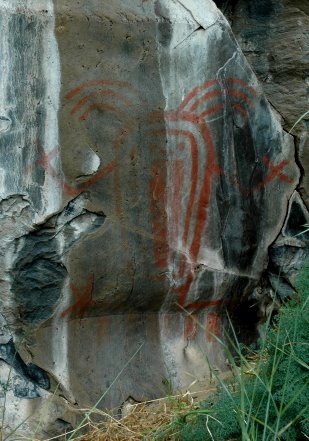
$10,000 FINE LEVIED..."NO, IT'S NOT COOL TO DEFACE NATIVE ROCK ART
Read more: Rock Art Fine


Tuesday, December 28, 2010

Archaeology Presentations, Rock Art Guide, Old Teeth, & A Third Branch of Humanity

OAS MEETING - TUESDAY, JAN. 4, 2011 - Revisiting the Meier Site

Dr. Kenneth Ames is the featured speaker at the January 4, 2011 Oregon Archaeological Society meeting. He will be talking about the Meier Site and Lower Columbia River archaeology.

The Meier Site, located near Scappoose, Oregon, is one of the most significant sites on the Lower Columbia River. It was excavated between 1987 and 1991. The site dates to the period from about AD 1400 to at least through the founding of Ft. Vancouver, in the 1830s and beyond. The Meier site revealed major residential habitation with a massive plankhouse. The talk reviews the results of analyses of thousands of artifacts, focusing on the Meier site, while also discussing other sites along the river.

Dr. Ames is Professor and Department Chair of Anthropology at Portland State University. He has conducted numerous archaeological field research in western North America and has authored numerous publications and reports.

The lecture will be held in the OMSI auditorium at 7:45 PM, and is free and open to the public. The presentation is preceded at 7 PM by a general business meeting, which is also open to the public. See www.oregonarchaeological.org or call 503-727-3507 for information.


ARCHAEOLOGY FOR THE CURIOUS-OAS BASIC TRAINING STILL AVAILABLE!
Are you looking to learn more about archaeology basics, or do you need a refresher on the history of the Pacific Northwest? The Oregon Archaeological Society offers an annual Training program.

OAS Basic Training, also known as Archaeology for the Curious, is taught by experienced regional professionals from organizations such as the National Forest Service, BLM, and the University of Oregon. The sessions will be held on six Saturdays in late Winter/early Spring.

Contact Steve Satterthwaite (503) 824-2264 satterts@hotmail.com or visit http://www.oregonarchaeological.org/training.htm


NEW ROCK ART GUIDE BOOK NOW AVAILABLE
Oregon avocational archaeologists D. Russel Micnhimer and LeeAnn Johnston announce the publication of their new guide book, Where to See Rock Art: Washington Oregon Idaho by Pendulum Press.

It contains general information about various aspects of rock art and specific information about where rock art can be seen in museums, visitor centers, state parks and public lands in Washington, Oregon and Idaho. Photographs, line drawings and a brief description give readers an idea of what they will find at 39 locations in the three states.
The table of contents make it easy to access the information in this 147 page paperback.

The authors are members of the Oregon Archaeological Society and have received numerous Loring & Loring Grants from the organization in support of their on going research and website www.oregonrockart.com.

The new book is available directly from Russel Micnhimer, P. O. Box 1653, Prineville, OR 97754. $14.95 + $4.00 S&H (USPS). For more information email TalkingEarth@hotmail.com.

(I've read Russel and LeeAnn's new book and its a great guide for anyone who wants to visit the very interesting public rock art sites of the Pacific Northwest...Mike)


DOUGLAS HISTORIAN TO SPEAK IN PORTLAND, VANCOUVER
Author Jack Nisbet will talk about "Point of Departure: David Douglas at Fort Vancouver 1825-33" at 2 p.m. Jan. 9 at E.B. Hamilton Hall on the Fort Vancouver National Site. Nisbet will also give a reading from his book "The Collector: David Douglas and the Natural History of the Northwest" at 7:30 p.m. Jan. 10 at Powell's bookstore in downtown Portland.

Douglas was the premier botanical explorer in the Pacific Northwest and western North America in the 19th century. His base of operations always remained at Fort Vancouver. The people he met there influenced his every move, and the changes he witnessed during his visits mark significant turning points for the social, economic, scientific, and environmental stories of the region. In this illustrated presentation at Fort Vancouver, Nisbet traces the energy Douglas brought to, and absorbed from, his central headquarters at Fort Vancouver. Nisbet is this year's Michael M. Powell Fellow at the Center for Columbia River History.

For program information, go to http://www.ccrh.org/calendar.php


AN OLDER ORIGIN FOR 'MODERN' TOOL-MAKING TECHNIQUE?
By News Services-October 29, 2010

A technique for shaping stones into sharp-edged points may have emerged about 55,000 years earlier than previously known, according to a study of stone tools from Blombos Cave in South Africa. Previously, researchers have also found other evidence of “modern” human behavior, such as shell beads, from this 75,000-year-old site, where new ideas and techniques may have been rapidly introduced...

Read the whole story at: http://www.flickeringtorches.com/2010/10/29/an-older-origin-for-modern-tool-making-technique.html


HUMAN, NEANDERTHAL, OR OTHER?

Finger Bones Point to New Branch of Humanity
By Charles Q. Choi
Published December 22, 2010
LiveScience
A finger bone and other remains from Siberia now reveals a previously unknown group of ancient humans once existed there, one neither like us nor Neanderthals.

Bizarrely, the DNA from these extinct Siberians seems unusually similar to that of Pacific Islanders from tropical Melanesia.The 30,000-year-old fossil was found in Denisova Cave in southern Siberia in 2008, a bone fragment that likely came from a fingertip of a young girl. It was discovered along with microblades (small stone blades used as tools), body ornaments of polished stone, and a molar shaped very differently from that of Neanderthals and modern humans, resembling that of much older human species, such as Homo habilis and Homo erectus. (The tooth and the finger bone apparently came from different members of the same population.)...

Read more: New Branch of Humanity?

More at: Three Types of Ancient Humans?


RESEARCHERS: ANCIENT HUMAN REMAINS FOUND IN ISRAEL
By Daniel Estrin
Associated Press – Mon Dec 27
JERUSALEM –Israeli archaeologists said Monday they may have found the earliest evidence yet for the existence of modern man, and if so, it could upset theories of the origin of humans. A Tel Aviv University team excavating a cave in central Israel said teeth found in the cave are about 400,000 years old and resemble those of other remains of modern man, known scientifically as Homo sapiens, found in Israel. The earliest Homo sapiens remains found until now are half as old...

Read the whole story at: Ancient Teeth


ANCIENT ROCK ART'S COLOURS COME FROM MICROBES
BBC Mobile
December 27, 2010

A particular type of ancient rock art in Western Australia maintains its vivid colours because it is alive, researchers have found...

Read more at: http://goo.gl/eAEFH


(Thanks to Oregon Heritage News, News Services, LiveScience, the Associated Press, Russel Micnhimer, and Jodi Lorimer for some of the info in this message).


Sunday, August 1, 2010

King Tut! Howard Carter's Excavation Notes Released...and more!

KING TUT TO THE MAX - OXFORD RELEASES HOWARD CARTER'S EXCAVATION NOTES/PHOTOS

Photo courtesy of The Griffith Institute

The Griffith Institute of Oxford University has just published Howard Carter's notes and records from his excavation of King Tut's tomb reports the Chinook Observer. Thousands of articles from the tomb are cataloged along with related photos. The website also includes hundreds of photos, some in beautiful color. Definitely worth looking at if you're at all interested in Egyptology.

More on Howard Carter's notes at: http://goo.gl/z84D
Tut's Chariot Heads to New York: http://goo.gl/n3Y8


DARWINIAN ARCHAEOLOGY LECTURE
Dr. Eric Bangs
WillametteCRA offices
623 SE Mill Street
Portland, OR 97214

Friday, August 6, 7:00 pm.
Refreshments provided

Frontiers are contact zones between cultures. The upper Rhine river valley was just such a contact zone when the Romans arrived in the first century BC. Over the next 500 years, the Romans engaged in a complex cultural interaction with the non-Roman inhabitants that eventually resulted in a creolized frontier society. A model derived from Roman authors suggests that this society was replaced by the arrival of the Alamanni in the late third century AD who, in turn, were replaced by the Merovingians in the sixth century.

The replacement model of cultural interaction in the upper Rhine is tested using a methodology based in Darwinian and meme theory. Seriations were created of stylistic elements from ceramic vessel assemblages from 14 archaeological sites in southwest Germany. The seriations suggest that non-Roman inhabitants in the first century AD did adopt aspects of Roman culture but only in the realm of emotionally charged ritual. For their day-to-day existence, the artifacts they used appear to have changed little and they maintained an identity adopted centuries before. In evolutionary terms, these practices had a high fitness relative to the cost of learning new ceramic manufacturing techniques.

ROUND-UP EXHIBIT TO OPEN AT TAMASTSLIKT
Museum-goers are invited to join in the excitement of the iconic
Pendleton Round-Up Rodeo by visiting Tamástslikt Cultural Institute’s
next exhibit, Tall in the Saddle: One hundred years of the Pendleton
Round-Up. The exhibit opens July 23 and runs through January 2011.
Starting in 1910, the Pendleton Round-Up was the event that made Oregon
a rodeo destination nationally and around the world. The exhibit,
developed in partnership by Tamástslikt, the Oregon Historical Society,
and author Michael Bales, imparts the rich sense of Round-Up history
from its modest beginnings as a small town harvest festival.
“Tamastslikt joined forces with OHS and Michael to present an
impressive exhibition not unlike the partnership between our Tribal
people and the citizens of Pendleton that makes the Round-Up unique,”
said Bobbie Conner, Tamástslikt director. Contact Tamástslikt Cultural
Institute at (541)966-9748 or visit www.tamastslikt.org for more
information.

THE HIGH DESERT MUSEUM’S 1st AUDIO TOUR: SIN IN THE SAGEBRUSH
The first audio tour at the High Desert Museum allows visitors to
experience the Sin in the Sagebrush exhibit with its creator, Curator of
Western History Bob Boyd. The exhibit marks the first in-depth look at
how communities of the American West formed around saloons, gambling
halls, and bordellos. The audio tour is rich with details, from how a
tent bordello was used, to how to produce an ace from your sleeve.
Visitors may download the tour at home from
Contact: Cathy Carroll, communications and promotions manager
541-382-4754, ext. 300; ccarroll@highdesertmuseum.org;
www.highdesertmuseum.org

NEW HOUSE AND LANDSCAPE DISCOVERED AT FORT VANCOUVER
National Park Service and University archaeologists have discovered one
of the homes of the multicultural village associated with Fort
Vancouver. The Village was home for 600 to 1000 Hudson’s Bay Company
(HBC) employees, their families, and visiting traders and travelers
during the fur trade period.

“Explorations in this house and its surrounding landscape will shed
new light on the lives of the diverse population that served this
colonial capital of the Pacific Northwest in the 1830s and 1840s,”
said Doug Wilson, National Park Service Archaeologist and Faculty Member
of the Department of Anthropology at Portland State University. Wilson,
who is directing the field school that is excavating the site,
identified tiny glass trade beads, buttons, musket balls, bottle glass,
and colorful Spode transfer print ceramics as evidence of the house and
its immediate surroundings. “The people living in the village, in
contrast to the “gentlemen” and their families inside the fort, left
no written records. This excavation is a way to recover the history of
this incredible community, which included people of many ancestries:
American Indians from many tribes, Native Hawaiians, French Canadians,
Europeans, Americans, and those of multiethnic origin - the Métis.”


NEW BASKET EXHIBIT FEATURED AT WARM SPRINGS
The Museum At Warm Springs is pleased to present "Baskets Tell A Story", exhibiting baskets from the Columbia River Plateau and beyond. The exhibit shows until October 10.

Baskets from the Museum's collection are featured, together with baskets on loan from the High Desert Museum, the Hallie Ford Museum and the Jan Musial Collection. The exhibit honors the Northwest Native American Basketweavers Association (NNABA) gathering October 1-2 at Kah-Nee-Ta High Desert Resort on the Warm Springs Reservation.

The exhibit and its programs are funded by an Oregon Arts Commission Community Grant and the Oregon Cultural Trust.

NAVIGATING THE PAST DAY CAMP AT COLUMBIA RIVER MARITIME MUSEUM
This week of August 9-13 theme is “On the River.” During the week,
campers will be immersed in activities relating to the cultures and
animals that depend on the river for survival. There will be an
introduction to the Chinese and Native American cultures with crafts,
games and legends. Children will be able to make their own baskets.
Campers will take walks to explore the river and surrounding area to
identify wildlife that call the river their home. Seeing the world from
a bald eagle’s perspective and building an eagle nest are part of the
activities planned. Boat races are part of the fun during this session.
Campers will also make a paddle wheeler. A field trip to Cape
Disappointment State Park is included. The week will conclude with a jet
boat ride and a swim at the Astoria Aquatic Center.

For more information, call Jackie Welborn at 503-325-2323 or email
welborn@crmm.org

STONEHENGE TIMBER TWIN REVEALED IN SHOVEL-LESS DIG
The Christian Science Monitor
By Danna Harman, July 23, 2010

Stonehenge had a twin nearby made of timber, say archaeologists who made the new discovery. But this dig was done with magnetometers, radar, and video game 3D technology. Without digging up one shovel of earth, or dusting off one rock with a toothbrush, Gaffney and the other members of the Stonehenge Hidden Landscapes Project have uncovered an incredible find – a mere two weeks into a three-year mission to map 5.5 square miles of land around Stonehenge...(sorry, couldn't resist using the tourist photo :-)

Read the whole story at: http://goo.gl/6TEU