|
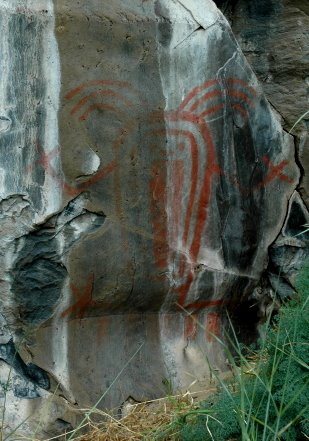
| Catlow Valley Highway-Photo Courtesy of Dave Anderson (Picasa) |
The Oregon Archaeological Society will offer its first lecture of the year on Tuesday, September 6, 2011. The title of the lecture is “People and Plants: Paleobotanical Studies at a Late Archaic Rock Shelter in Oregon’s Catlow Valley.” Jaime Dexter, a doctoral student in Archaeology at the University of Oregon, is the featured speaker.
Dexter’s research interests include paleoethnobotany, palynology, plant genetics, and environmental archaeology. She has studied the subsistence strategies of hunter-gatherer populations in the northwestern Great Basin and is specifically interested in utilizing cross-disciplinary approaches to recognize and address prehistoric environmental impacts.
The presentation is at the Oregon Museum of Science and Industry (OMSI) at 7:45 PM, and is free and open to the public. The talk is preceded at 7 PM by a general business meeting, which is also open to the public
See www.oregonarchaeological.org or call 503-727-3507 for more information.www.oregonarchaeological.org.
OAS Field Trip: Huckleberry Processing Fields, Saturday, September 10 - Space Available!
Rick McClure, Forest Archaeologist & Heritage Program Manager for the Gifford Pinchot National Forest at Mt. Adams, Washington and archaeologist Cheryl Mack, will conduct two field trips to huckleberry processing field sites, focusing on the archaeology of the Cascade Crest - late summer upland use oriented toward collection and processing of huckleberries. The trip is expected to last the entire day.
 |
| Photo courtesy Fat of the Land |
Meet at 9:00 a. m. at the Mt. Adams Ranger Station. This trip will go into the Indian Heaven Wilderness and is more difficult due to hiking conditions.
Contact Betty Tandberg (360) 695-6021 or tandberg0408@comcast.net to sign up for either of these trips since the number of participants is limited.
Final Resting Place of Clark County Pioneers

Columbian Staff Reporter
It wasn’t easy for the dozen or so family members to pack up a wagon train in 1850 and bump, thump and roll their way from Missouri to what would eventually become east Vancouver.
When they staked their claims for free land around the Columbia River and Government Island, the small band probably didn’t consider that one day they’d end up as founding members of a county that would grow to more than 425,000 people...
Read the whole story at: Fishers Cemetery
British Columbia Village May Be 10,000 Years Old
Mark HumeWhen they staked their claims for free land around the Columbia River and Government Island, the small band probably didn’t consider that one day they’d end up as founding members of a county that would grow to more than 425,000 people...
Read the whole story at: Fishers Cemetery
British Columbia Village May Be 10,000 Years Old
Globe & Mail

But shortly after the team from the University of Northern British Columbia started to sink pits into a shell midden (refuse dump) on the Central Coast, he realized it was much bigger than anyone imagined – so large he now believes it is part of a long-lost, ancient village called Luxvbalis...
Read the whole story at: Ancient Village

When Farid Rahemtulla and his anthropology students began to dig in the forest floor on Calvert Island, he pretty much knew what to expect – lots of clam and mussel shells.
But shortly after the team from the University of Northern British Columbia started to sink pits into a shell midden (refuse dump) on the Central Coast, he realized it was much bigger than anyone imagined – so large he now believes it is part of a long-lost, ancient village called Luxvbalis...
Read the whole story at: Ancient Village
By Jeff German
Las Vegas Review-Journal


The desecration last year of prehistoric artwork at the Red Rock Canyon National Conservation Area sparked outrage and focused attention on the spread of graffiti throughout the Las Vegas Valley.
This week, the 17-year-old youth charged with defacing the Red Rock area received his punishment behind closed doors in federal court, ending a case that rallied the community to help remove the spray-painted graffiti...
This week, the 17-year-old youth charged with defacing the Red Rock area received his punishment behind closed doors in federal court, ending a case that rallied the community to help remove the spray-painted graffiti...
Read the whole sad story at: Rock Art Graffiti
By Brandon Keim
Wired
A fresh analysis of Ötzi the Iceman’s stomach suggests a grisly new climax to the world’s most famous prehistory murder mystery: death by ambush, a surprise killing in the afterglow of a big meal.
Ötzi was found in 1991, frozen and fantastically preserved in ice high in the Italian Alps, where he’d perished 5,300 years ago. With his tattoos and cool tools and smart outfit, rendered by artists with soulful brown eyes under a weathered brow, he became a Copper Age celebrity. Public and scientific imagination seized on the circumstances of his life — and, of course, his death...
Otzi fans can read the whole story at: Otzi Dies on Full Stomach
By Ian Sample
Guardian.co.uk

A recent discovery suggests early humans were wielding sophisticated stone tools at least 300,000 years earlier than thought. A rare haul of picks, flakes and hand axes recovered from ancient sediments in Kenya are the oldest remains of advanced stone tools yet discovered.
Archaeologists unearthed the implements while excavating mudstone banks on the shores of Lake Turkana in the remote north-west of the country.
Archaeologists unearthed the implements while excavating mudstone banks on the shores of Lake Turkana in the remote north-west of the country.
Read the whole story at: Ancient Tools
(Thanks to Robin Harrower, Russel Micnhimer, The Columbian, Wired, the Guardian, The Globe and Mail, and Las Vegas Review-Journal for some of the info in this post.)